
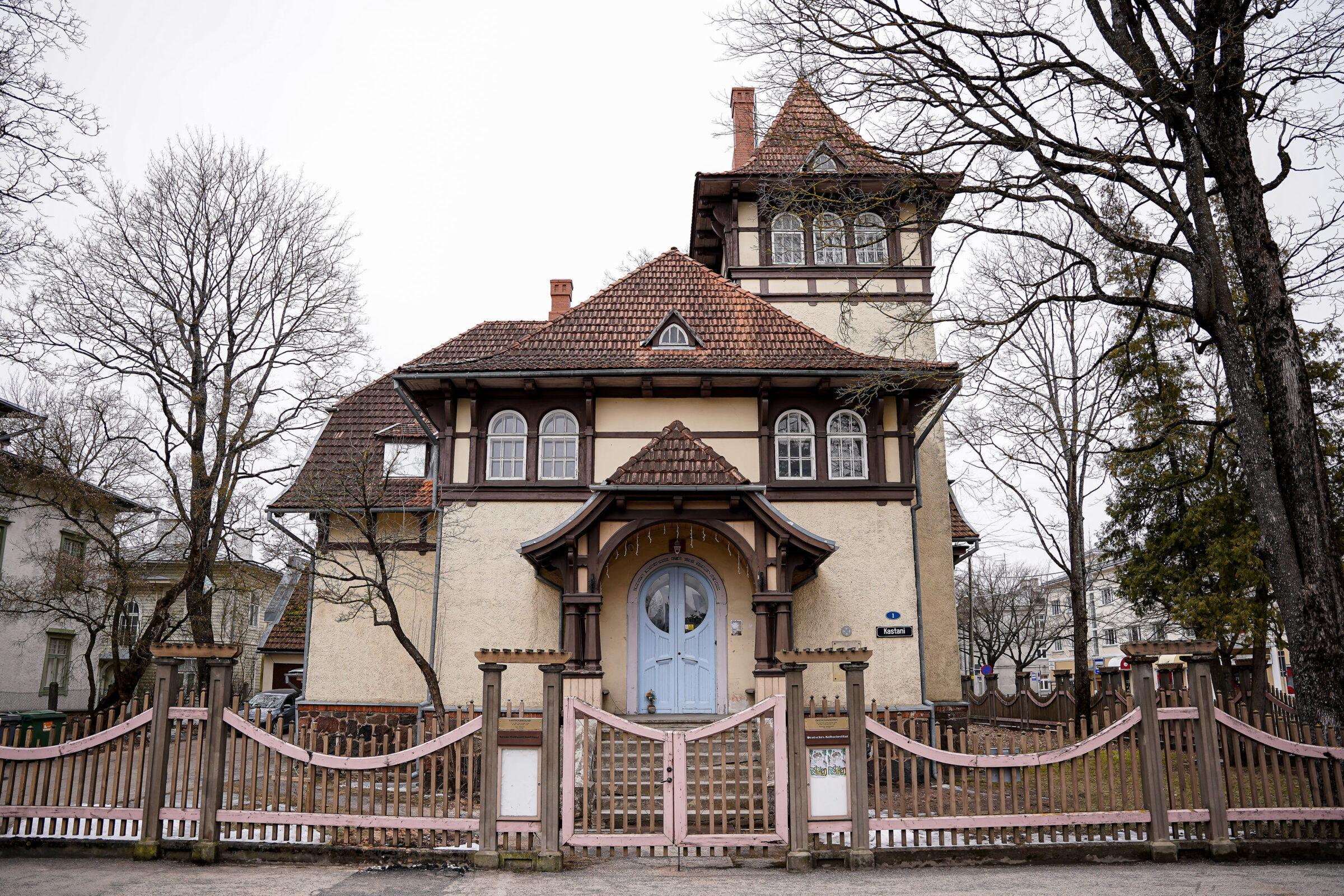
Now, you may be wondering why I’m writing about German roots in Tartu. Well, I’ve been learning German for so long and I am passionate about it. Entschuldigung for making a promotion for the Department of German Studies. During the History of German-speaking countries course, our lecturer, Reet Bender, brought out so many examples of German influence around us that I felt immediately that I needed to deep-dive into the topic and share it with you. Let’s cut to the chase: German footprints are everywhere (in Tartu).
Let me start with an example. You may probably know the tradition that each fox has to go through “initiation”. Fox (rebane in Estonian) means a first-year newbie at the University of Tartu, who historically was not yet considered as a full student. Nowadays, the fox initiation happens during the Autumn Student Days often involving alcohol and many different obstacles, such as sliding down the Pirogov Park Hill and jumping down from height.
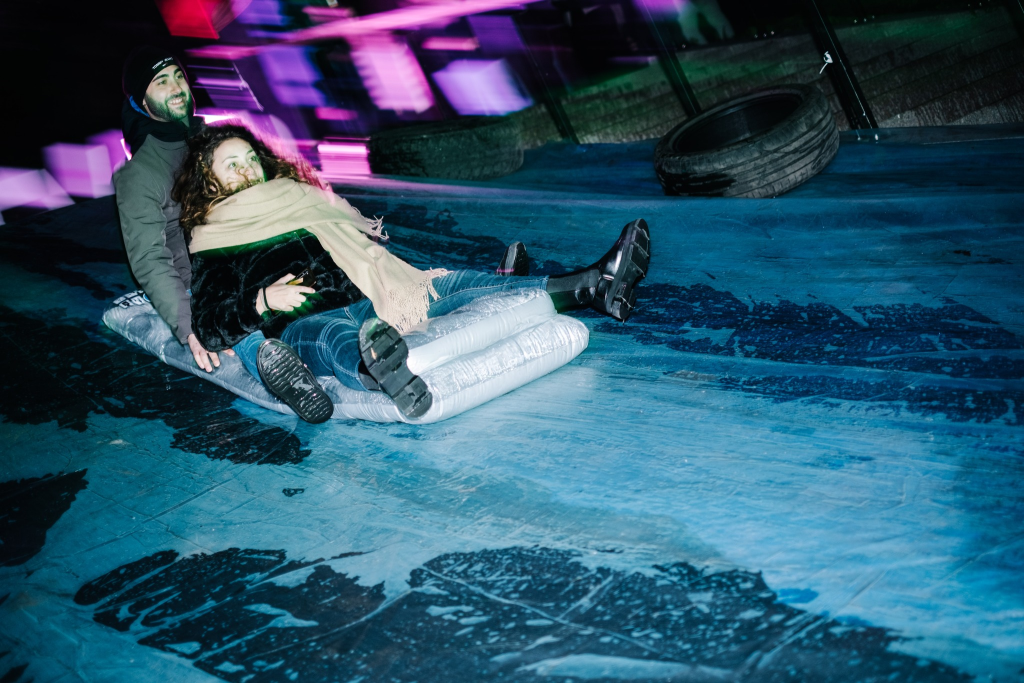
Taken from Tartu Tudengipäevad Facebook (click here)
Back in history, Baltic Germans started this tradition, just in a slightly different way. First of all, it happened in spring, when the ice began to drift on the Emajõgi. (So yes, today we become “real students” much faster.)
Each fox had to celebrate the arrival of spring by “drinking beer in support of Pskov orphans”. Students sat on the wooden bridge and were asked for a donation to the Pskov orphanage. Then a fox had to buy a beer and the empty bottles were thrown onto the ice floes and floated down though the Emajõgi to Lake Peipus in Pskov. The bottles would be sold and used to feed orphans. Firstly, as we can see, environmental awareness hadn’t reached a high level back then. Secondly, the long-lasting footprint of Baltic German traditions can be seen even today, when you think that you are going through a fun student life event.
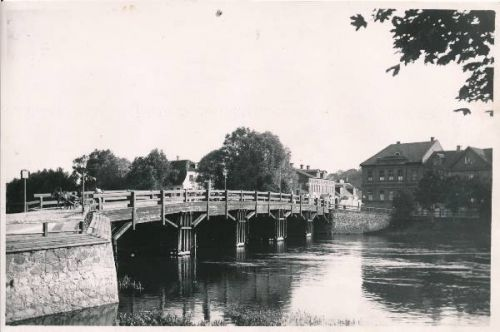
Taken from Saksa Tartu guide
Let’s continue with the shortest street in Tartu – Lüübeki, which is named after Lubeck for a great memory of Hansa times. Even though this name was received in 2004, it truly connects the bright history of Tartu to the medieval trade union. On the one side of this street is located one of the most beautiful landmarks in Tartu city center – St. John’s Church (Jaani Kirik in Estonian). It is famous for its many unique terracotta figurines on the exterior, of which about 200 remain, possibly representing Tartu citizens or crowned figures of special significance. It was reconstructed many times and Baltic Germans took an active part in it.
Taken from Tartu Ülikooli-Jaani Kogudus
Moving on to the present day. Harry Potter and Tartu are connected. What? What could possibly connect them? But here is a small plot twist. Bildungsroman, a literary genre describing coming-of-age novels, originated in Tartu! Johann Karl Simon Morgenstern coined the term in 1819 during his university lecture. As I love both Tartu and Harry Potter, I can easily start a promotion campaign for Tartu from the Harry Potter side! Those who are interested, please contact me!
Turning back to the topic, according to the new article on bike sharing policy, Tartu has the second most performing bike sharing system in Europe. I would make a little non-scientific hypothesis here that this started in 1869. One of the major German-language newspapers, Dörptsche Zeitung, (coming from the old German name for Tartu, “Dorpat”) published an advertisement to readers that there was a sale of stylish two- and four-wheeled vehicles, which were unusually called “velocimobiles” (Velocimobilen in German).
So, to sum it up, yes, I wrote an article to promote the Department of German Studies, but I disclaimed it in the beginning. I would like to end with an element of poem by Carl Erdmann “Dorpat beim Eintritt und Abschied (Dorpat: Arrival and Departure)”:
“So ist’s denn Freiheit, Liebe, Streben,
Was Dorpat uns so theuer macht…”
“So it is freedom, love, and aspiration
That make Dorpat so dear to us…”
Isn’t it true?
Cover photo credits: German Cultural Institute in Tartu
All images are the author’s own unless otherwise specified.
Sources:
- Keel ja Kirjandus (click here)
- Baltic Journal of European Studies (click here)
- On the nature of Bildungsroman (click here to read)
- ScienceDirect (click here)

Leave a Reply