
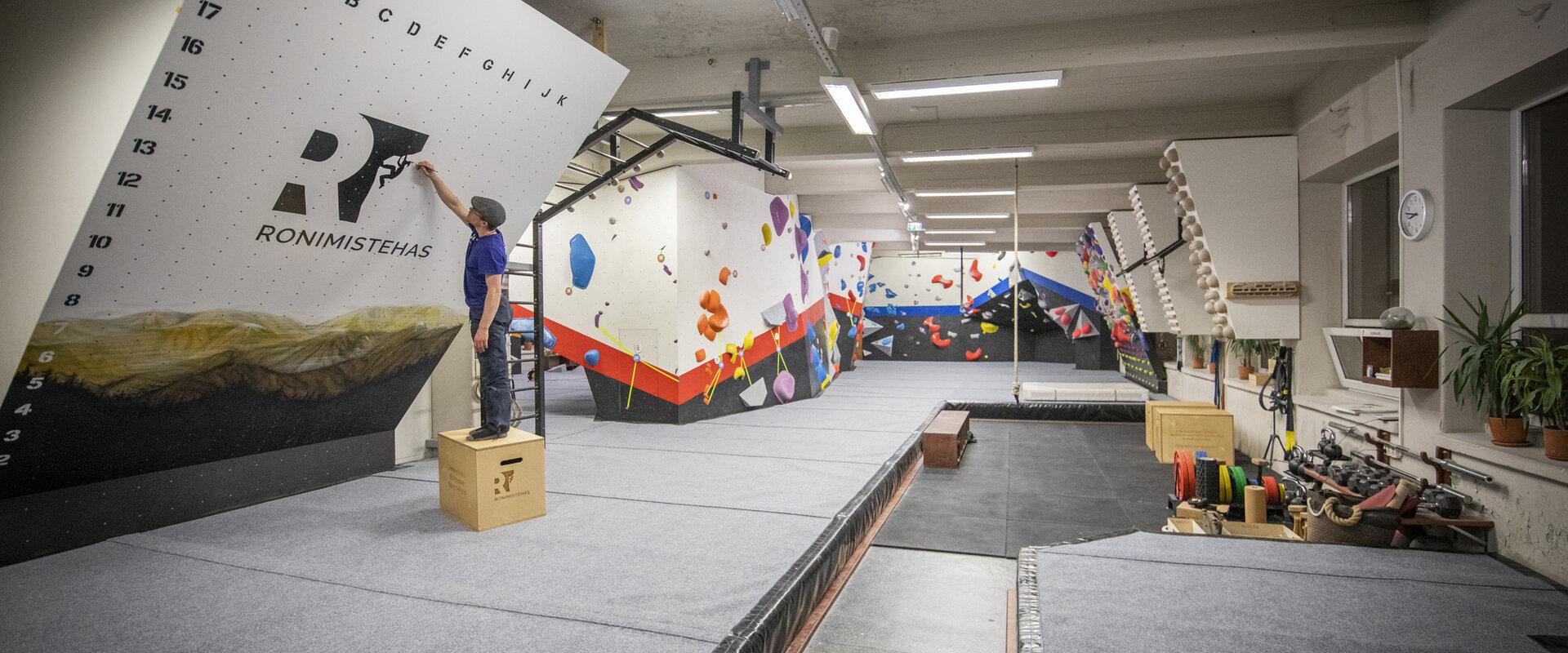
As an international student in a small yet highly digitalised Estonian city, Tartu, I was wondering what sorts of activities can be found here. And one of them caught my attention long ago, but I was hesitating about going there, especially alone. As you may guess, it is climbing.
Of course, you may ask yourself, and it might even be funny, that on this flat territory of Estonia, people seem to like climbing as much as going to sauna (okay, maybe I hyperbolised. Nothing beats a go to sauna). But after thinking a bit and talking to an Estonian, I found the answer to this “absurd” thought. And as neither a scientist nor a psychologist, I believe this desire stems from the deprived feeling of an extreme that can be achieved through climbing. Maybe this was even the joke in itself, introducing this sport to the Estonian nation.
Nevertheless, it has many advantages. For example, it often serves as a gym substitute. Some people would rather climb than run a 10km on the treadmill. And that is totally understandable!
How did I commit to this idea?
Frankly speaking, I was not planning on going there, let alone by myself. However, as a Business Administration student, I enrolled in a course that required organising a team-building event with people I teamed up with. (For context, this course builds on teamwork and communication. Thus, this assignment’s aim is to create a safe environment for the following activities.)
That’s when we decided to go climbing at Ronimistehas – the first independent climbing hall in southern Estonia.
When we got there, we were offered pairs of shoes made specifically for climbing, so they would not slip off. Additionally, there were two changing rooms for men and women, equipped with a sauna (of course, there would be one). So, the comfort was on point!
Expectations VS Reality
My expectations go beyond the mere idea of climbing, but rather the sport. I remember watching the climbing competitions and being surprised by the power it takes for an individual to perform in such a tiring, difficult situation. It might seem that strength alone is the main driver of success in this kind of sport, but that is completely untrue. Strategy is what matters; one wrong step and there is no way back and no way further, only down. It is a combination of strength, perseverance, and critical thinking that makes a champion in this sport. After being offered this opportunity, I did not hesitate a minute and said “yes” to this journey, to see for myself how hard, yet astonishing, this is.
When I came to the “playground” I thought it would be easy in terms of height and not so easy in terms of pulling your own body up. Nevertheless, I believed I could do it with my stubbornness.
First, I looked at my team members, who had already been to this place several times. And they seemed confident doing it, which gave me a strong sense of my own success.
It is important to note that there are different difficulty levels, starting from green, which is the least difficult. I tried that one, since I am a beginner in this activity type. Once attempted to go up, I reached the finish point, and I was afraid to go down or jump because the height seemed too extreme. Eventually, I jumped, and with every following climb, it was less scary.
Personally, I would not say that this is the type of activity for my leisure time, but it broadened my view of things and how imagination can shape your perception of something in a false way, especially when you have not tried it yet.
Nevertheless, I am glad I had an opportunity to experience this type of activity.
Annual Climbing Events
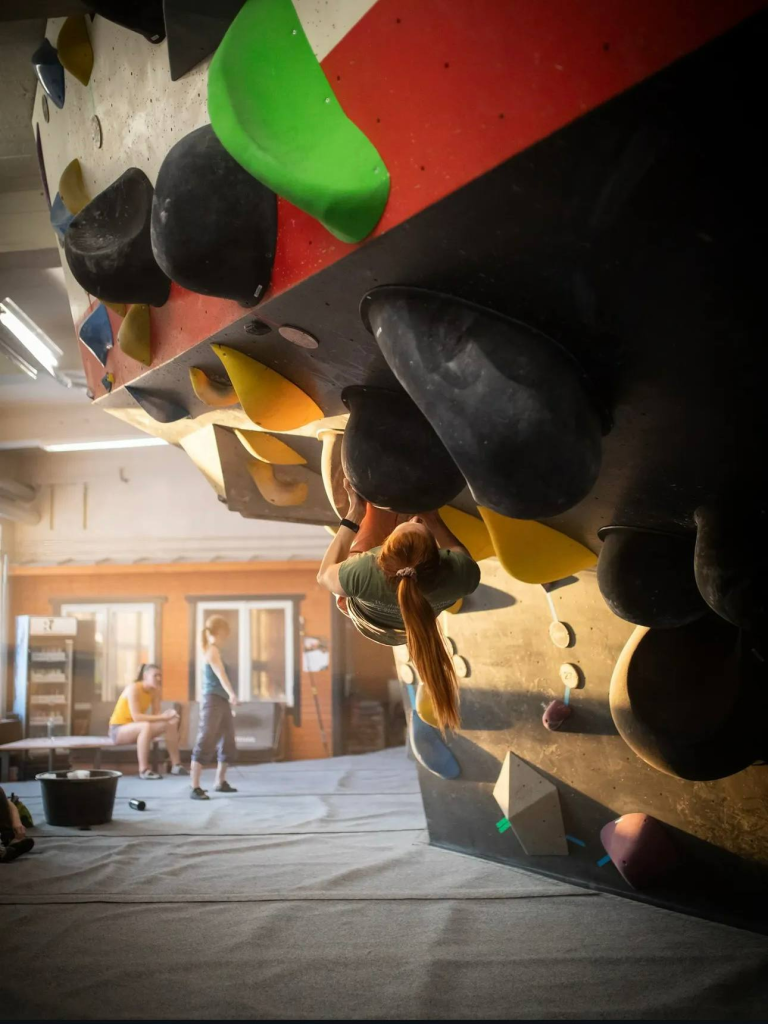
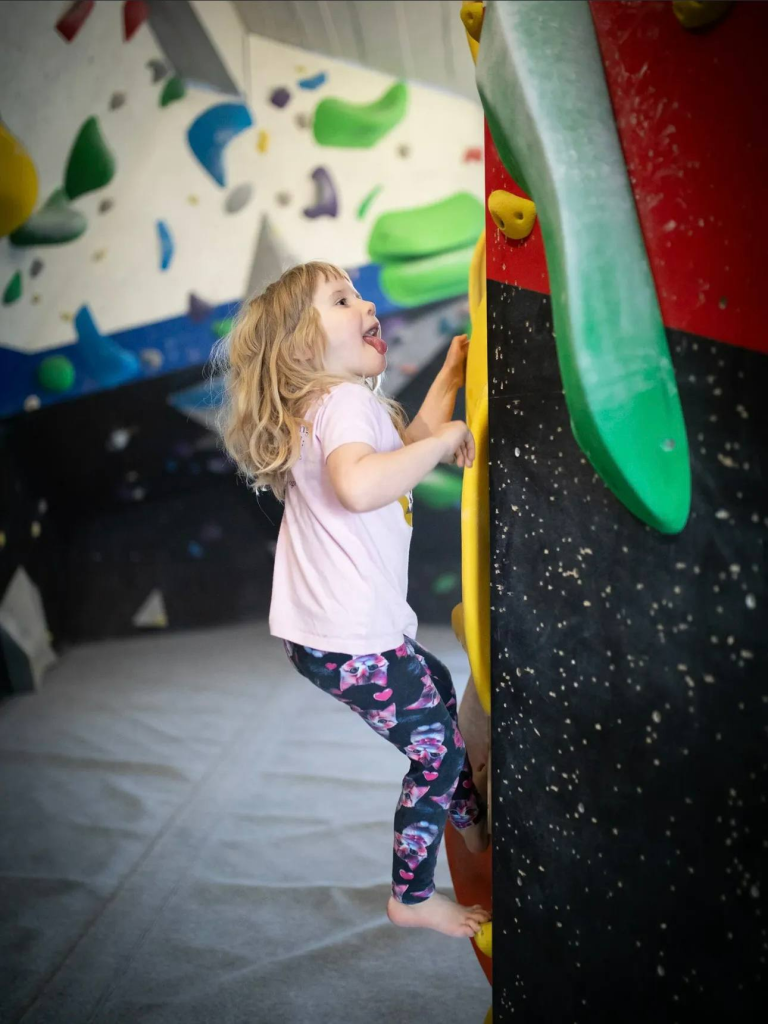
Photo credits: Ronimistehas Instagram page, Kristin Juurmaa
Texas Cup Festival is a series of events dedicated to the climbing community of Tartu and Estonia. It has been hosted for 3 years already, and this year is the 4th season. The festival continues for several stages, each lasting 1 week. There, you can try multiple routes and even win prizes. There is no age limit; even 8-year-olds are very welcome to come.
Additionally, there is a separate event for youth, named “Tartu Junior Climbing Open 2026”. It has become the largest youth climbing festival in this part of Europe. It opens doors for more than 200 young climbers from various countries, ranging from Finland to Turkey.
This is quite impressive and does not sound “absurd” anymore, as it attracts climbers from all over Europe, still being a flat country. I believe this suggests that the desire to be good at something does not necessarily depend on a country’s location or historical events. Though this is very common (e.g., MMA being highly widespread among people living in the south-eastern part of Europe due to historical events).
Tartu Ülikooli Akadeemiline Spordiklubi – Ronimissein
University of Tartu Sports Club is another closely located place for climbing. There is a high climbing boulder with several difficulty levels. Unfortunately, I haven’t had the opportunity to go and try it there, but just looking at the picture, I am sure it will suit extreme lovers.
The ledges that follow the mountain’s slopes are very steep, making this activity even more dangerous. For such cases, there is a belay, and a mat can be laid out for a soft landing. This sports club is designed for more experienced climbers, but if you’re a beginner, it’s also not a problem.
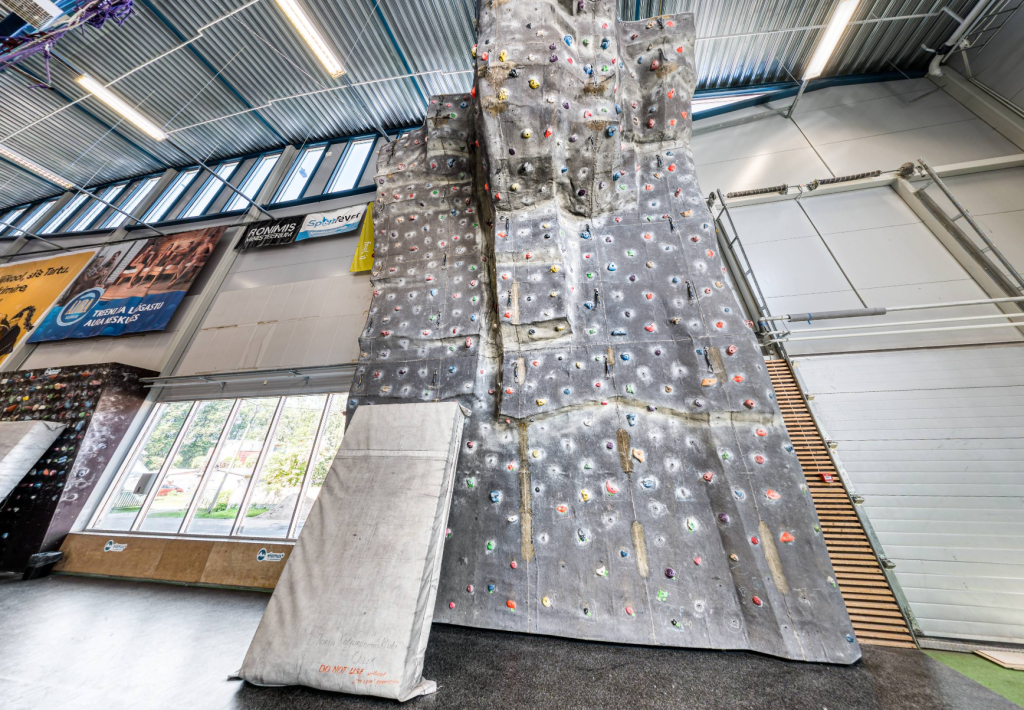
Photo Credits: Tartu Ülikooli Akadeemiline Spordiklubi
If you are not a fan of climbing, there are plenty of other activities to do in this club, such as cycling, powerlifting, basketball, badminton and so on. If you find one of them interesting and ready to try, then that is the right place. And its location is very convenient; the dormitories, the Delta University building and the supermarket are all located in that area.
And always remind yourself that a sound mind in a sound body is a short but full description of a happy state in this world!
Cover photo credits: Kristin Juurmaa
All images are the author’s own unless otherwise indicated.

Leave a Reply