
When I thought about participating in the UniTartu Summer School 2026, I could never have imagined that I would find myself in the middle of the Viljandi forests, climbing an old mill. But here I was, a person who usually avoided camping and physical activities at all costs, spending two days in nature and somehow enjoying things I would normally never choose to do.
But before I get ahead of myself, let me explain. The term Summer School always appeared in my head along with “lectures” and “getting-to-know-the-city activities”. But when I was proposed to go with participants 90 kms from Tartu, to the Männiku Metsatalu – somewhat surprisingly, I agreed. I had no idea what exactly awaited me, but as it turned out later, that was probably a good thing.
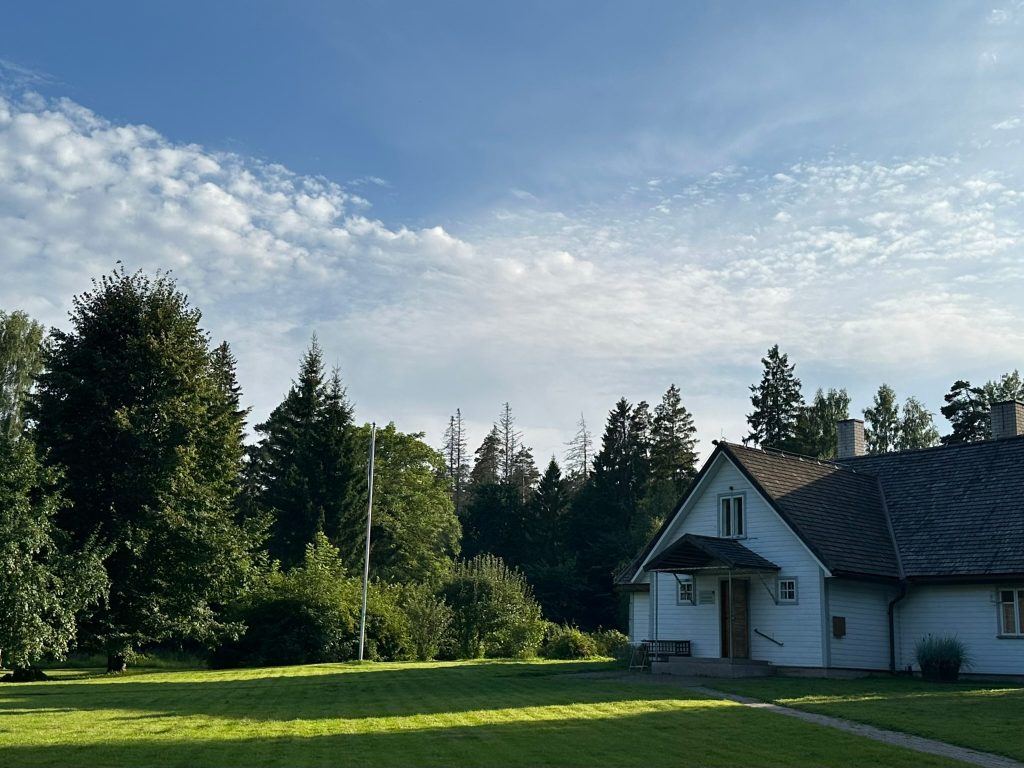
After about an hour and a half on the road, we arrived at Männiku Metsatalu, hidden among the forests about 10 kilometres from Viljandi. We were welcomed by small wooden guest houses surrounded by almost nothing but trees, grass and water. It felt remote and peaceful, the kind of place where you quickly stop thinking about what is happening outside of it.
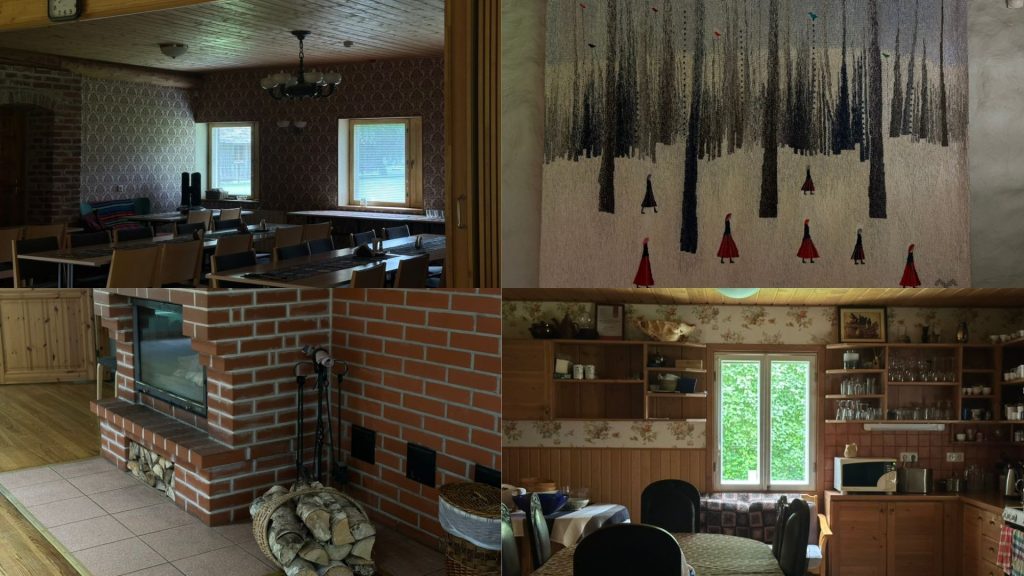
The same atmosphere continued inside. The houses were simple and cosy, with wooden ceilings, old-fashioned furniture and a large brick fireplace. What caught my attention most were the small details: traditional patterns, textiles and decorations that made the place feel much more personal than an ordinary guest house. Even the interior seemed to reflect the nature surrounding us.
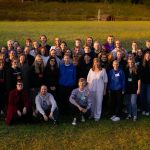
Once we had settled in, the organisers did not give us much time to get too comfortable. We started with a few outdoor games and team-building activities, and with only six participants and six organisers, the whole experience felt much more personal. Everyone was involved, and there was really no chance to quietly disappear into the background.
One of the activities was a rescue simulation designed to test how well we could cooperate as a team. We entered a building with our eyes closed, without knowing how many “victims” were inside. We were not allowed to stand up and could only move while crouching. Once we found someone, we had to put a helmet on them, get them into a sleeping bag, place them on a blanket and carry them safely outside. With six people trying to communicate and make decisions without being able to see, the whole process became much more difficult than it initially sounded.
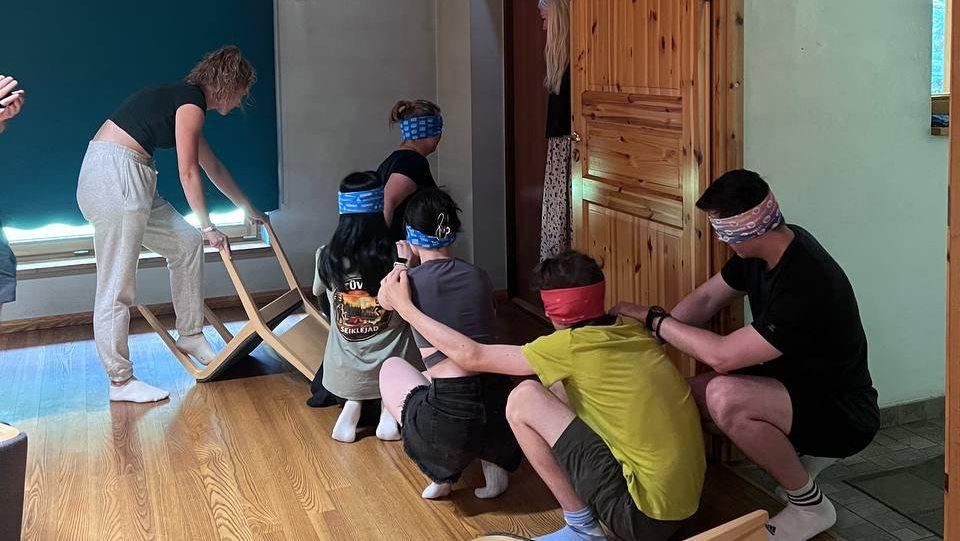
What I liked most, however, was what happened afterwards. Instead of simply moving on to the next activity, we sat down and discussed what had worked, what had gone wrong and why. It was interesting to realise how differently people behave when nobody has the full picture: some naturally start giving directions, others focus on completing a particular task, and sometimes everyone is so busy trying to help that communication becomes the biggest challenge. For something that started as a game, it turned into a surprisingly good lesson ion teamwork – and a reminder that cooperation is not always about doing more, but sometimes about stopping for a second and actually listening to each other.
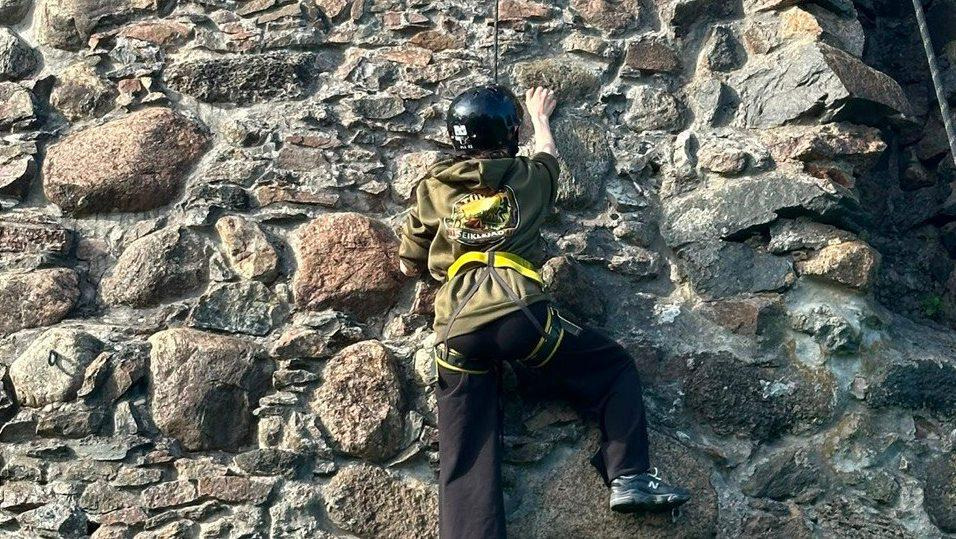
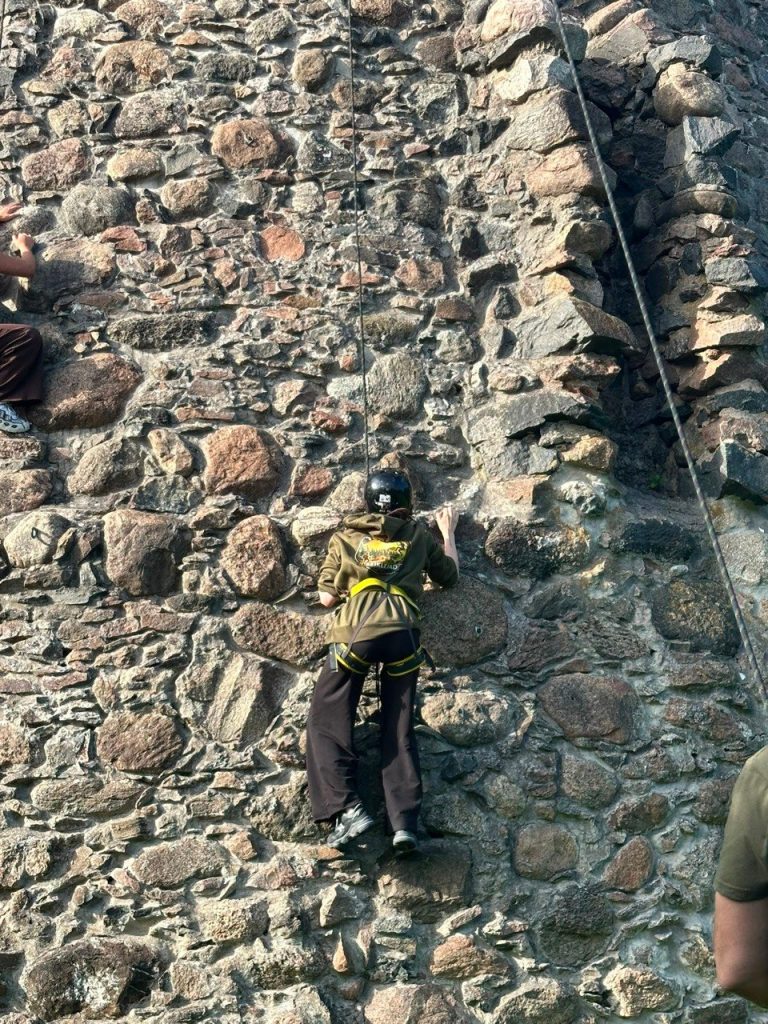
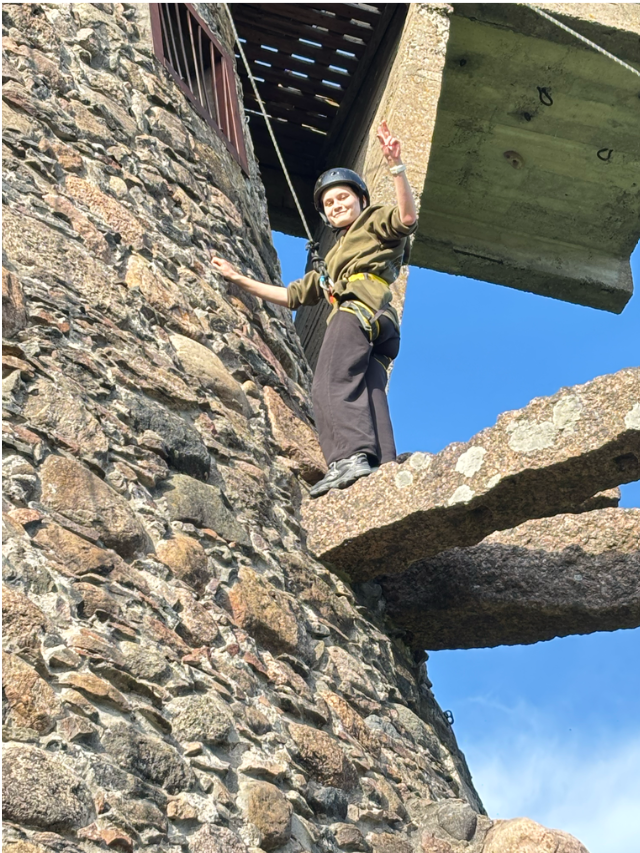
Later, we were told that our next activity would be climbing an old mill. Considering my usual relationship with physical activities, this was definitely not something I would have volunteered for myself. Once I started climbing, though, there was something surprisingly satisfying about it. Even with safety gear and instructors, you can’t focus on anything but your own limbs – every next step was up to me to find where to put my foot, what to hold on to, and convince myself to keep going. By the time I reached the top, my arms and legs were already starting to ache, but it was that nice muscle ache that comes with knowing you’ve actually done it. Looking down from the top, I mostly remember thinking: okay, I really climbed this thing.
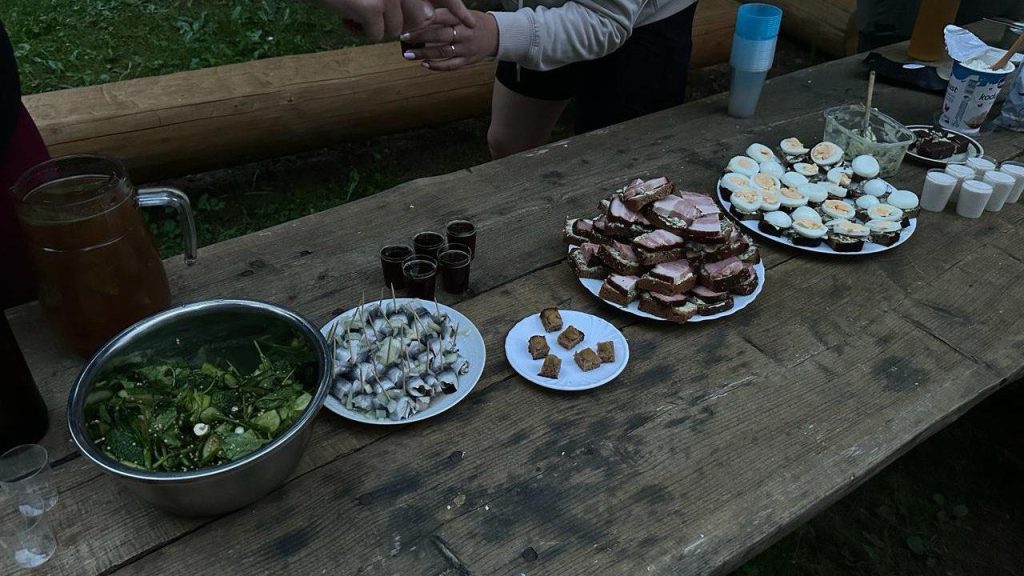
After all the activities, the evening slowed down a bit. We went to the sauna and then went for a swim in the river – probably the most Estonian way to end a day spent in the middle of the forest. Later, we gathered for dinner and had the opportunity to taste traditional Estonian dishes.
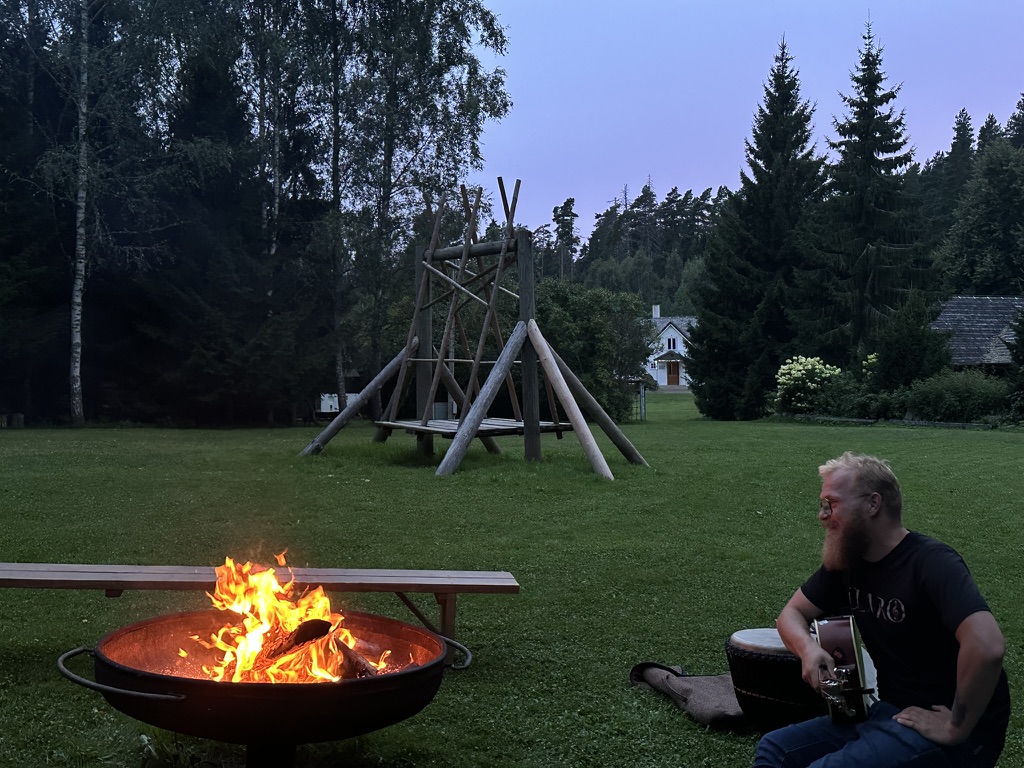
When it got dark, we moved to the campfire, roasted marshmallows, and even tried to learn a few Estonian songs together.
I was surprised by how familiar the whole evening felt. Estonian and Ukrainian cultures are very different in many ways, but even when you’re sitting by the fire after a long day, with a table of food you’ve never tasted before and singing songs you don’t understand at all, you feel at home.
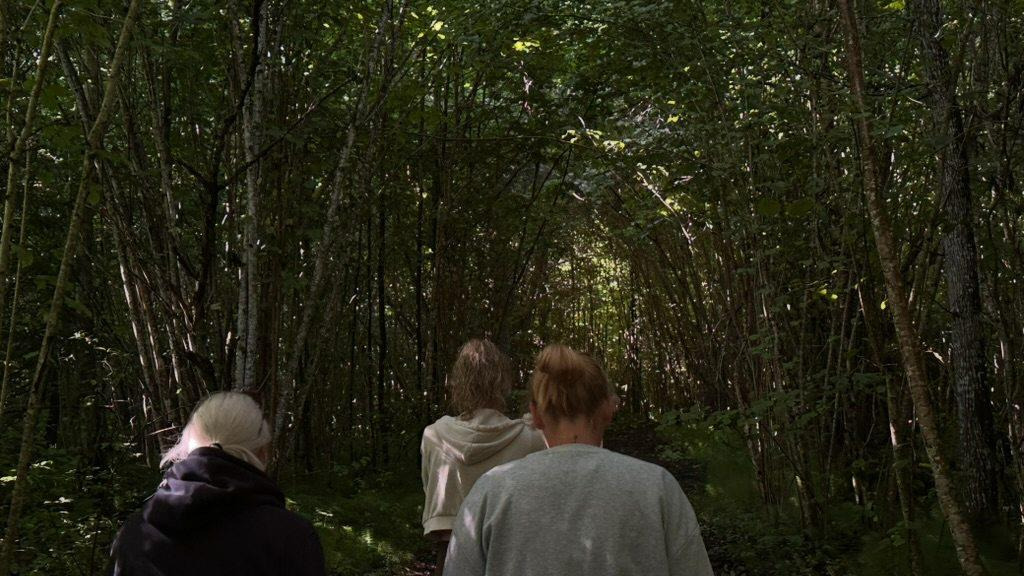
The next morning we went for a hike through the forest. After such an eventful first day, everything suddenly became much quieter. We walked for hours, surrounded only by trees, narrow paths, and grass still wet with the morning dew. You are left alone with your thoughts, sometimes interrupting to talk about everything and nothing at the same time.
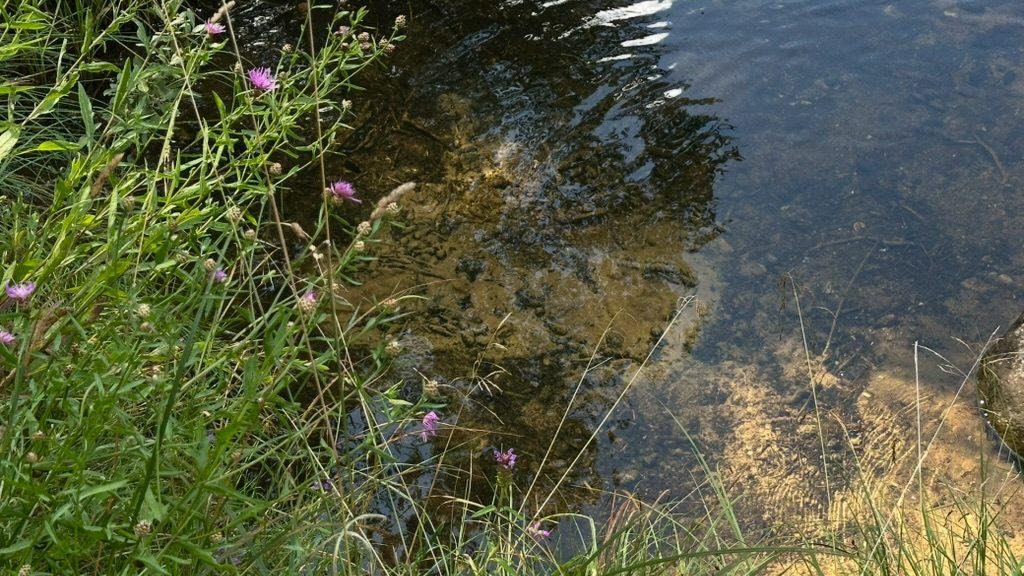
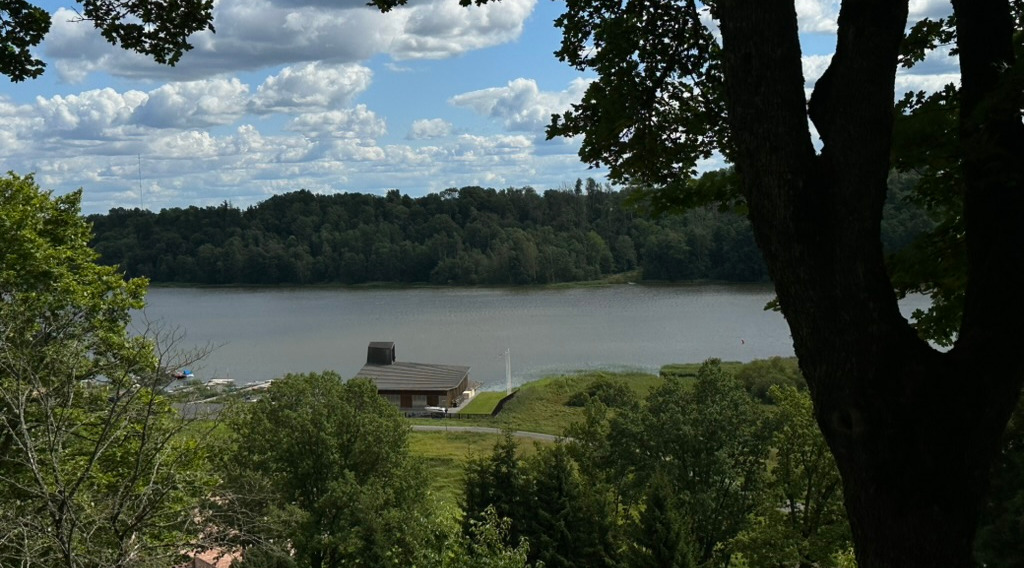
At some point we reached a natural spring, where we stopped to drink cold, clean water straight from the spring. Later we sat for a while by the lake, surrounded by the same forest we had walked through all morning. And I think that is when the title of this story began to make sense to me. After weeks of constantly wanting somewhere to go, something to do, or something to think about, a morning walk through the forest was restorative.
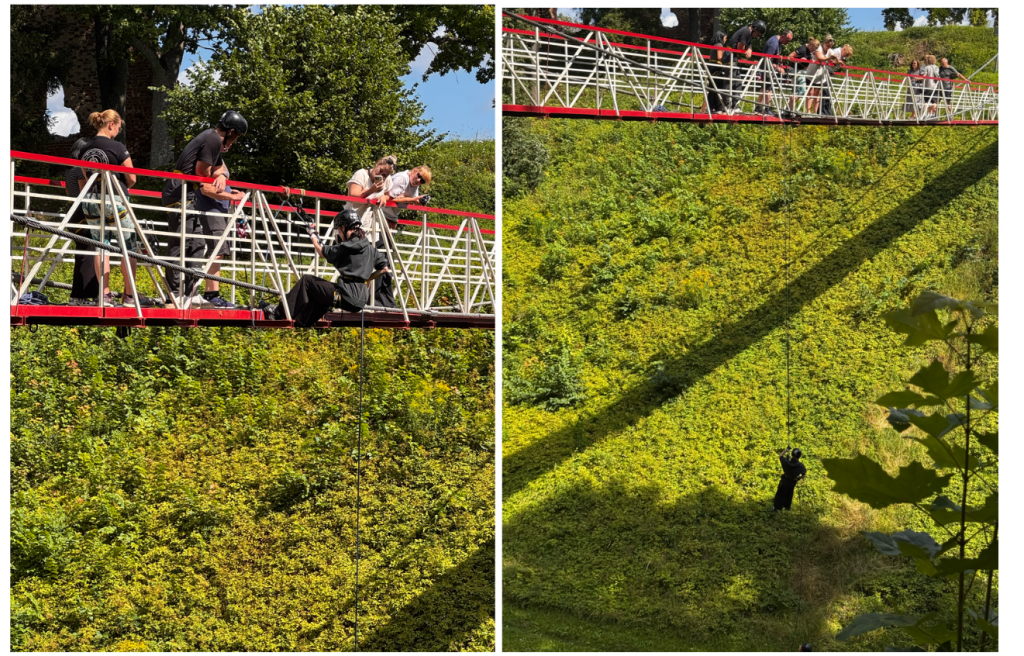
Later that day, we went to Viljandi, where the organisers had prepared a quest and a city bingo for us. Instead of simply walking around the city, we had to find different landmarks and complete small tasks along the way, which turned sightseeing into a game. Our final destination was the ruins of Viljandi Castle, and apparently just reaching them was not enough – we also had to descend on a rope from the suspension bridge.
Looking down before taking that first step was probably the hardest part. Once again, it was one of those moments when you know you are completely safe, but your brain still needs some convincing. After the climbing experience the day before, though, I think I trusted myself a little more. And ending the quest somewhere above the castle ruins, attached to a rope, was definitely a more memorable way to see Viljandi than a regular city tour.
Looking back, I think the part that worried me most before the trip became one of the things I appreciated most about it. I am the kind of person who likes to know what is going to happen. Give me a detailed agenda, tell me where we are going, what we are doing and when, and I will be happy. So going on a trip where I knew almost nothing beyond where and when to show up was slightly terrifying.
But somewhere between rescuing “victims” with my eyes closed, climbing an old mill, swimming in a river after sauna, singing Estonian songs around a campfire, walking through a forest and hanging from a rope above the ruins of Viljandi Castle, I changed my mind about not knowing.
Because if someone had sent me the full agenda beforehand, I am honestly not sure I would have agreed to all of it. I would probably have looked at some of the activities and immediately decided that they were not for me. Instead, I simply found myself there, doing things I had never planned to do and, in some cases, would never have chosen to do on my own.
Maybe that was the best part of the whole experience. For once, not knowing what came next did not feel like something I needed to control. It meant giving myself a chance to say yes before I had time to talk myself out of it. And I came back with sore muscles, a lot of photos, and a slightly different idea of what I am capable of.
All images are the author’s own unless otherwise specified.



Leave a Reply