

If you’re anything like me, chances are you’re currently wondering what the medicine degree here at the University of Tartu has to offer beyond the day-to-day classes. I remember when I was applying, I was wondering if and how I would gain practical experience during the first three years. After all, everyone says that these years are mainly theory-focused, right? Well, the short answer is “kind of,” but let me explain.
Practical Skills in the Classroom
Over the first three years, we mainly cover the basic and human sciences in preparation for future clinical courses. Courses are designed to develop and build on one another through time. Take, for example, first-year anatomy and biophysics. They build the basis for second-year human physiology, which later becomes pathophysiology in the third year.
The same is true for practical knowledge. In the first three years, different courses provide the foundational hands-on experience for future settings. Moreover, it’s not only clinical basics that are taught. Lab basics are taught as well. So while skills like measuring blood pressure, blood sampling, and catheterisation are taught, so are things like microscopy, cell culturing, and spectroscopy.

My friend using an Eppendorf pipette in one of our practical classes.
An Introduction to Research
During the second-year autumn semester, one of the core curriculum subjects is “Research Work for Students.” Essentially, this course serves as an introduction to the realm of research, the skills needed in the field, and some of the research opportunities available for medicine students.
Essentially, throughout the course, students have the opportunity to choose topics that interest them most and customise their learning experience around them. To learn how to analyse and present data and results, we had a group presentation task in which we presented a pre-existing research paper on our chosen topic. And my favourite part was that we had seminars where our very own faculty members presented their ongoing research projects.
Joining Labs
These seminars from the second-year course played a significant role in revealing the opportunities available to the medical faculty. After all, the lecturers who present in this course are not the only ones with ongoing research projects. As a matter of fact, most professors at the university do, and most are open to having undergraduate students join them in their labs. This offers the chance not only to gain more information about your field of interest, but also to expand your CV and gain much more hands-on experience.
Research Courses
Want to get credits for your research work? That’s also a possibility! In the autumn of the second year, we were introduced to many research courses targeted at students. The idea is that each course has multiple parts. By the end of the course series, each participating student has their own publication about their own research project. These courses are also quite interesting and vary in speciality, ranging from biochemistry to neurology.

Some of the many student research courses that I found on ÕIS.
SÄRTS
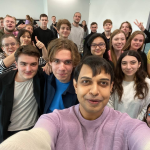
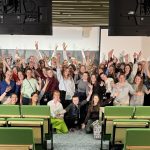
SÄRTS is our very own interdisciplinary student research conference. It aims to bring together students from Estonia and abroad to discuss their ongoing research and inspire new generations of medical students to join the field of research. Throughout the conference, there are workshops, guest speakers, and a panel discussion. It even offers the chance to network and meet students from different medical disciplines worldwide!

Photo credits: SÄRTS website (click here)
Overall, there are many opportunities here that extend far beyond the classroom and courses. Of course, most information and opportunities are rooted there, but that doesn’t mean they’re limited to it. The most important thing, as usual, is to take a good look at how you want to approach things, make a plan, and then go for it!
All images are the author’s own unless otherwise specified.


Leave a Reply