
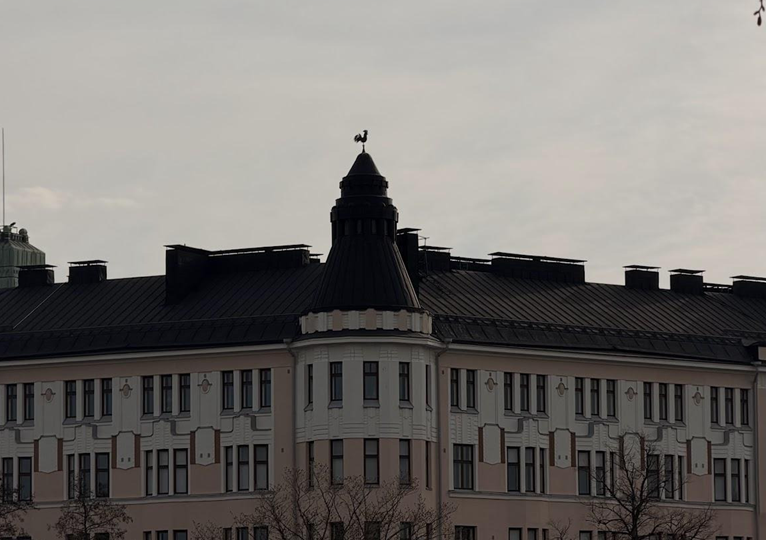
Last weekend I walked 55,000 steps in one day in Helsinki. Honestly, I can still feel it in my legs. But that was kind of the point, I wanted to actually see the city, not just the postcard version of it. So I walked, more or less, every street I could find in the centre.
A bit of context: I study at the University of Tartu but I live in Tallinn, which means I look at the Gulf of Finland from one side of it almost every day. Helsinki is two hours away by ferry and I had been putting the trip off for months with no real reason. Last Saturday I finally booked a hostel and went.
The ferry was already half the trip
I thought the ferry would just be transport. It wasn’t. There was a live concert on board, a band playing covers, people dancing with drinks in their hands. I bought something to drink, found a window seat, and just watched the Baltic sea go by while the music played in the background. By the time we got close to Helsinki harbour, my mood had already shifted. And I hadn’t even stepped off the boat yet.
If you are thinking about doing this trip, the ferry alone is worth talking about. Two hours, comfortable, occasionally fun. You can also nap if that’s more your thing.
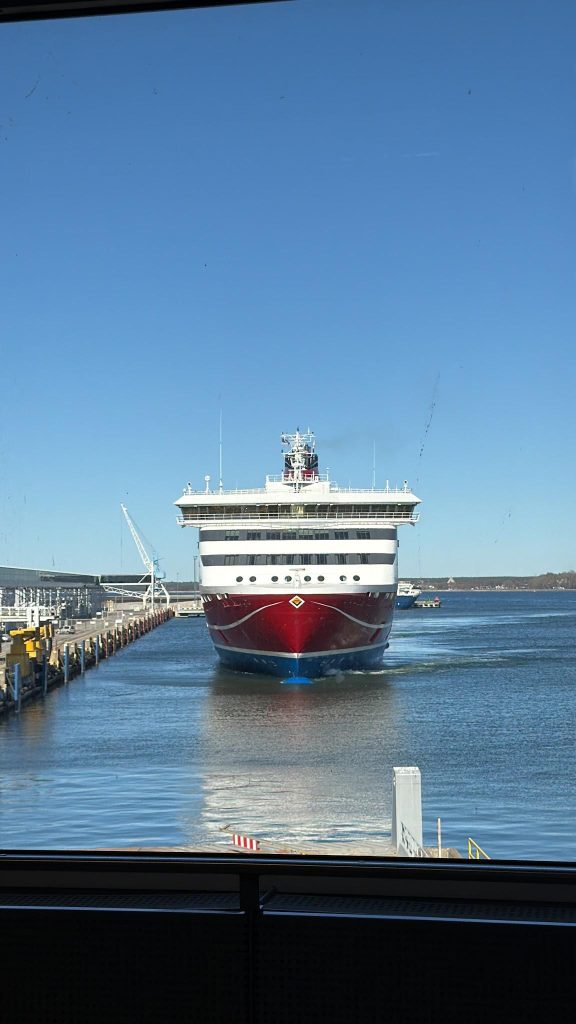
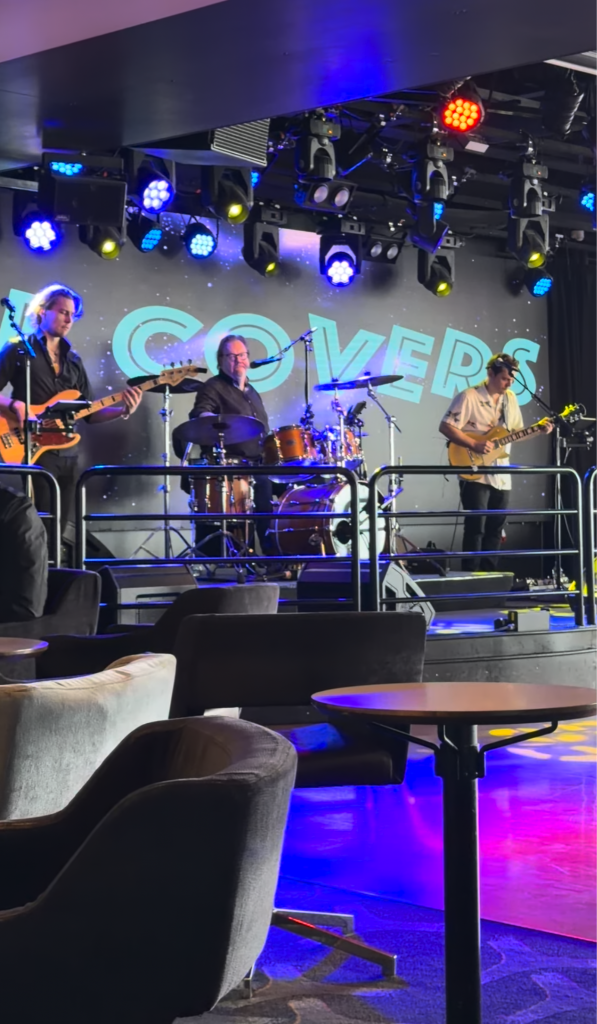
Left: the ferry waiting in Tallinn, before boarding. Right: the onboard concert two hours later, which I did not expect when I bought my ticket.
People here actually look happy
The first thing I noticed when I got off the ferry was very simple, almost too simple to write down. People looked happy. Not in some performative way, just in their bodies. Groups sitting on the grass in parks, someone dancing on the street, no hat out for tips, just dancing because they felt like it. Loud laughter from café terraces. None of this is dramatic, but you don’t really see it in Tallinn. Tallinn is quieter, more reserved. People keep to themselves more.
Finland has been ranked the happiest country in the world for nine years now. I obviously can’t verify that in two days, that would be ridiculous. But I did ask a Finnish guy at the next table what he thought was behind it, and he answered without thinking: insurance, trust in the government, life is comfortable here. He listed it like he had answered the same question before. I don’t know if that’s the full picture, but the way people moved around in public said something on its own.
The architecture surprised me
Walking into the centre of Helsinki, you notice the buildings before anything else. It is not the Soviet-era stuff you find in parts of Tallinn. It is this mix of older classical architecture and clean modern lines, sitting next to each other without much fuss.
The most obvious example is Senate Square. There is a big white cathedral at the top of a long flight of stairs. I didn’t go inside, but I walked past it twice, once in the morning and once at night, and both times it caught me. The lighting in the evening is really well done. In front of it, in the middle of the square, there is a statue of Alexander II. Tip: if you ever go, this is where pretty much every walking tour starts. I accidentally found a guided group there in the morning and just attached myself to the back of it. Got a free history lesson about the city. Would recommend the tactic.
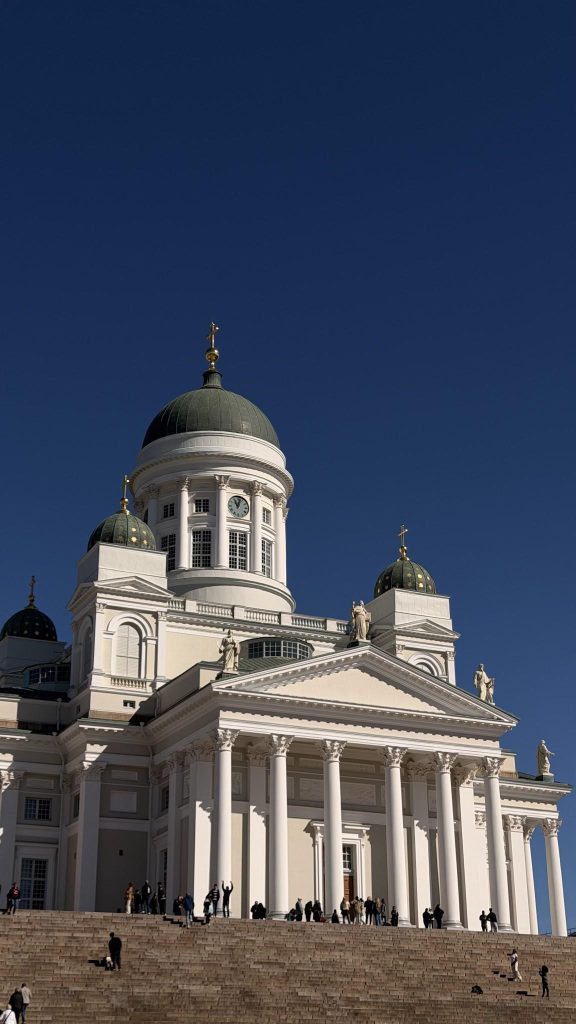
Senate Square’s white cathedral, plus a side street that shows the other side of Helsinki’s architectural mood.
I spent a lot of time just following the tram tracks too. They turned out to be a great way to get around without thinking. You stop where you want, watch people for a while, then keep going.
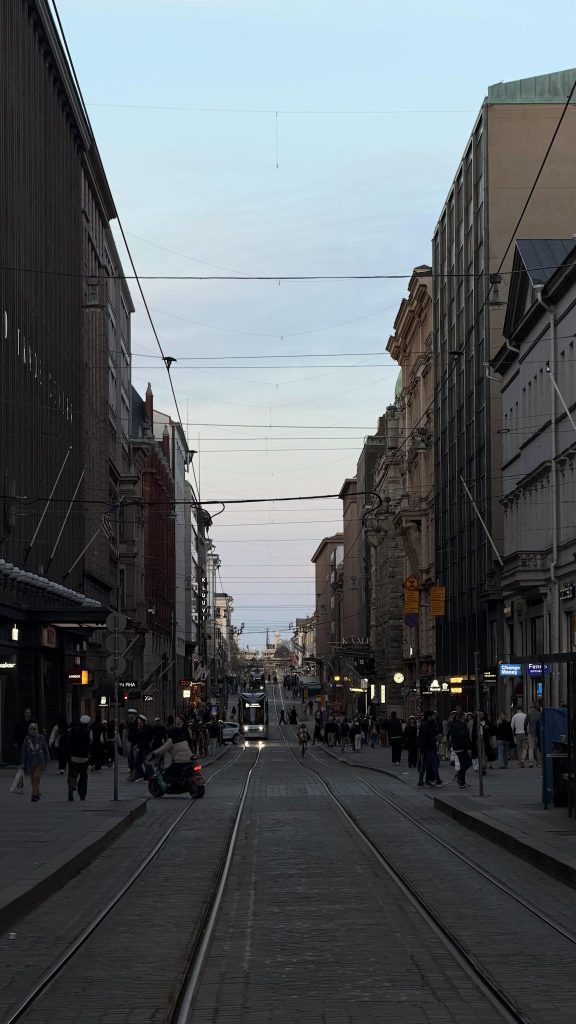
Helsinki at dusk, looking down a tram line.
Oodi Changed My Mind About Libraries
If I have to pick one place in Helsinki that genuinely got to me, it is Oodi, the central library. I went in expecting books. That is not really what it is.
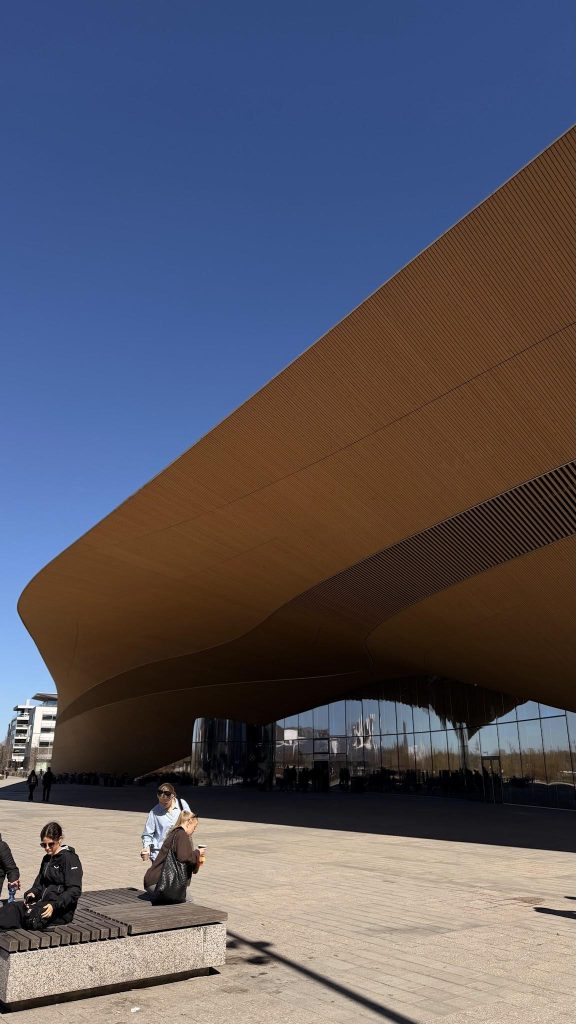
Oodi from the outside.
The ground floor is a café and a restaurant. The middle floor has group study rooms, music rooms, gaming areas, sewing machines, computers, tools for architects and makers, basically anything you could need. The top floor is where the actual books are, and it was full. Teenagers, parents with kids, students, and one older woman who was carefully picking a novel off a high shelf. I watched her go back and forth between two books for a while. Small moment, but it stuck.
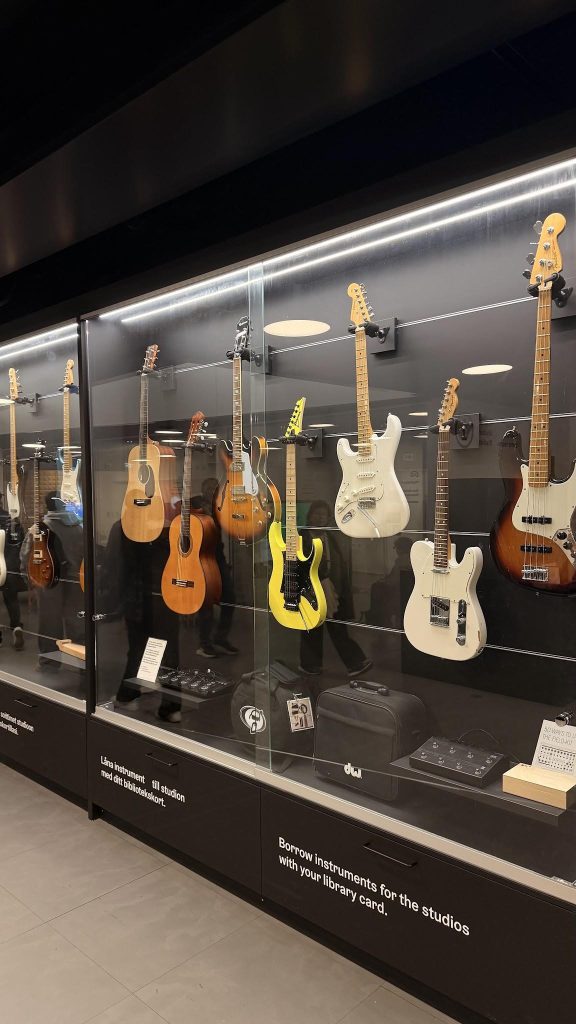
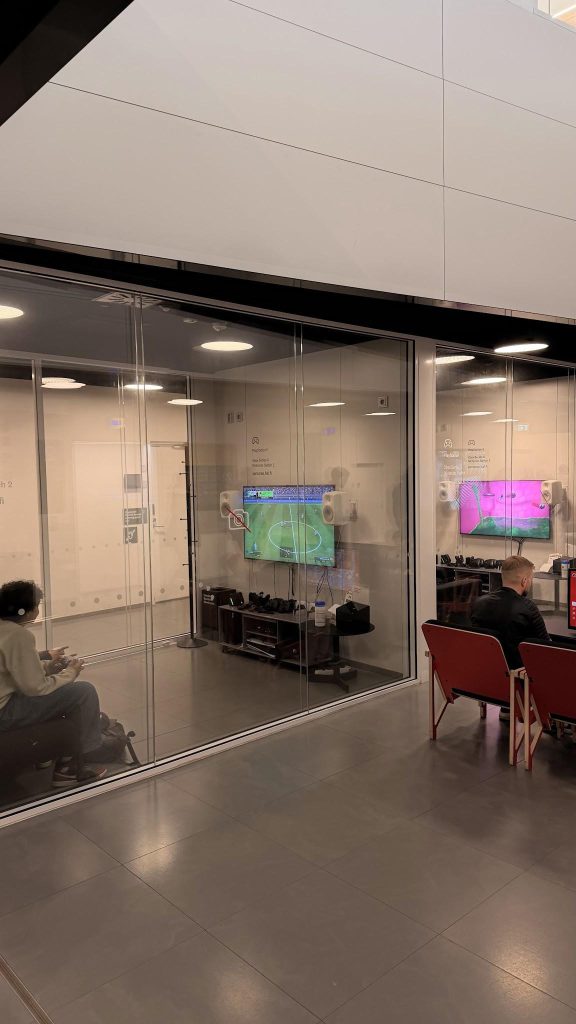
Inside Oodi: instruments you can borrow, and gaming rooms
The top floor also opens onto a balcony that faces straight across to the Finnish Parliament building. Apparently this was on purpose. The library puts citizens at the same height as their government, literally, on the same eye level. I thought that was a really nice idea. As someone studying in Estonia, where the relationship between people and the state is also taken seriously (in our own digital way), it felt familiar but also bolder. This is what a library should be, in my opinion.
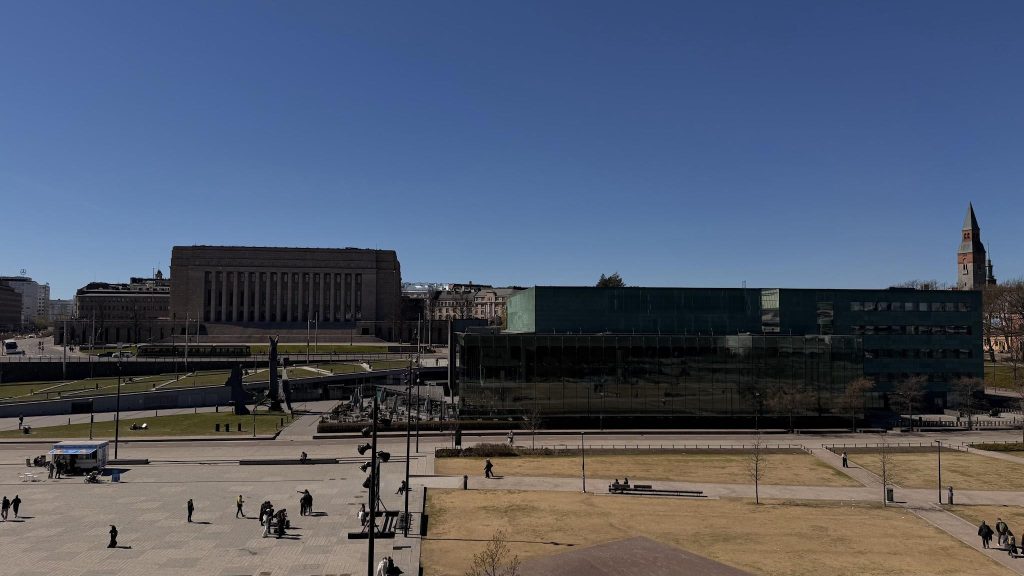
The view from the Oodi balcony
The Cost of Things.
Helsinki is expensive. I knew this going in, but seeing the prices is different from reading about them. My rough estimate is that everything is about 1.75 to 2 times the price of the same thing in Tallinn. Hostels, food, drinks, coffee, all of it.
Public transport is the example I keep coming back to. A single ticket in the AB zone is around €3.30 in 2026. That isn’t crazy compared to other European cities, but as someone with a Tallinn residence registration, I am used to taking the tram for free. Paying to tap onto a tram felt strange to me, even though I know that is how it works almost everywhere. Just something to keep in mind if you are coming from Estonia.
The rule of thumb I would give to other students from Tallinn or Tartu: take your usual prices, almost double them, and that’s about right.
Salmon soup and saunas on a Ferris wheel
The Finnish dish I saw on basically every menu was creamy salmon soup. I had to try it. I am from Türkiye, where soup is almost always made with a meat or chicken broth, so a soup with salmon as the base felt strange to me. Not bad, just unfamiliar, the same way Estonian black bread did the first time I tried it. Honestly, I am not sure if I would order it again outside of Finland, but I am glad I tried it once. Some food just belongs to where it is from.
And then there is the sauna. The word itself is Finnish, one of the very few Finnish words that made it into English without being changed. That alone tells you something about how big saunas are here. Around 3.3 million saunas for a population of 5.5 million, which is the highest per-capita number in the world by a long way. And you really feel it in the everyday infrastructure. I saw a Ferris wheel in the centre that has one of its cabins converted into a sauna. I am serious. I laughed when I saw it. Coming from Türkiye, where sauna isn’t really part of daily life, I only started to understand the appeal after moving to Estonia. Finland takes it further than that. It is almost a national joke at this point, but it is also clearly real.
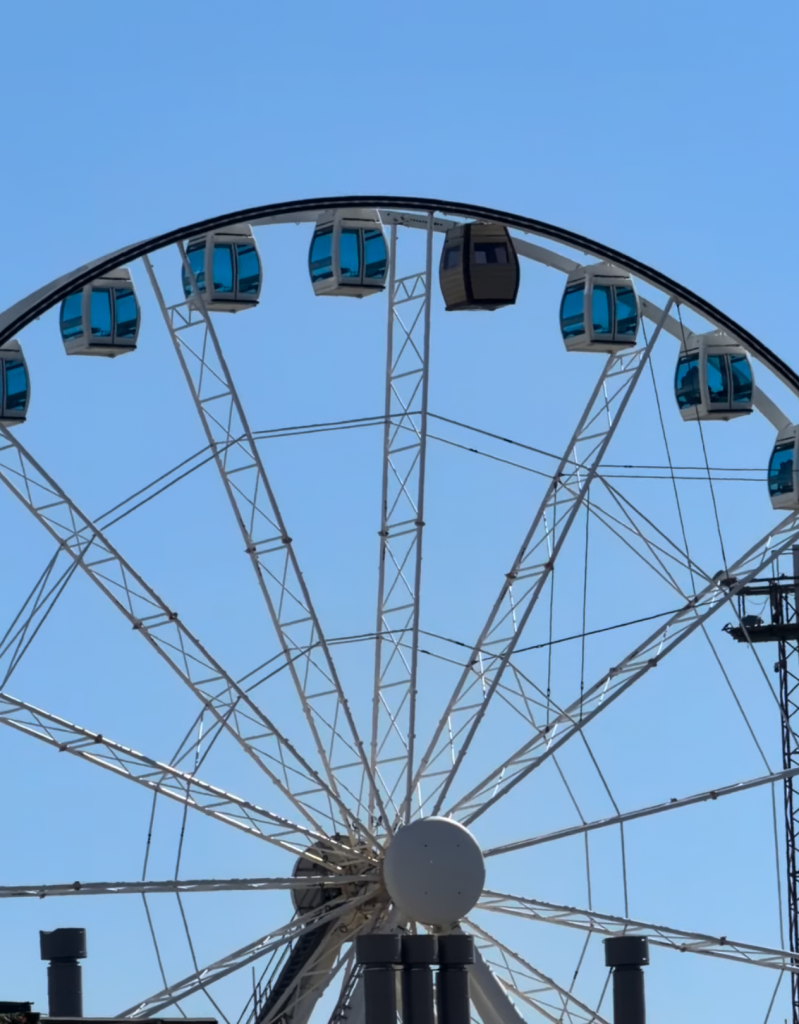
Look closely. Yes, one of them is a sauna.
It also helps that more than 75% of Finland’s land is covered by forest. That is the highest share in Europe. Once you know that, a lot of small things start making sense, the wood-burning sauna culture, the way people seem comfortable with silence, the casual way they spend time outside. Even in the middle of Helsinki, you can feel that the forest isn’t very far away.
Coming home, and seeing Tallinn differently
One thing I didn’t expect: this trip made me appreciate Tallinn more, not less. I’ll say it gently, Helsinki isn’t as clean as Tallinn. There were cigarette butts in places, some scattered litter, the kind of small mess that comes with being a busier and more tourist-oriented city. Estonia is regularly ranked among the cleanest countries in the world, my mom keeps sending me Instagram reels about it, and standing back in Tallinn on Sunday evening I had to admit she’s right.
Helsinki is also a much bigger city. More tourists, more languages on the street, way more variety in general. There is also a lot more street art, and a lot of it is genuinely good. Street performers too, some of them were really talented.
A few practical notes
I went in mid-spring. The weather was 10–15 °C and sunny, perfect for walking. But here is the catch: the week before my trip there had been snow, and the week after the forecast was heavy rain. So if you go, check the forecast carefully and pack for both possibilities. The weather can change a lot in two weeks here.
That’s about it. Two capitals, very close to each other geographically, but they don’t feel the same at all. The ferry runs often, the trip is short, and a weekend is enough. If you are a student in Tartu or Tallinn and you have been thinking about going, just go. Walk until you can’t walk anymore. Then come home and look at your own city with slightly different eyes.
All images are the author’s own unless otherwise indicated.

Leave a Reply