

Tere! I’m writing this while leaning back and taking a deep breath. I have officially completed my first semester. If you are reading this now, you are probably where I was a few months ago, asking questions like:
“Estonia? Isn’t it really cold?”
“How is Software Engineering there?”
“Can I actually manage this?”
So let me tell you what it was really like, not just what the brochures promise.
Expectations vs. Reality
Before coming to Tartu, I honestly thought Software Engineering would mean sitting alone in front of a laptop all day writing code and barely talking to anyone. That idea disappeared during the first week, right after I walked into the Delta Centre.
From the very beginning, the programme focuses a lot on teamwork. Instead of being a person who just codes alone, you work in groups, build projects together and give presentations. In many ways, it feels like a small simulation of working in real life.
Of course, there were moments when bugs made us extremely frustrated, but talking about them with your teammates during a coffee break somehow makes everything easier.
One thing that surprised me was how crowded some classes are. In most master’s level IT courses, there are around 60 to 70 students. This is especially true in the first semester, because many courses are shared with other IT master’s programmes. It feels strange at first, but it is actually quite normal.
Social Life and the Reality Check
The Erasmus community in Tartu is very active, especially during the first weeks. At the beginning, I tried to attend almost every event. Later on, I attended none of them. Not because I did not want to, but because I simply did not have the time.
I clearly remember asking a second year Software Engineering student why I never saw them at Erasmus events. He laughed and said, “Those events are not really for us, Melih. You will understand later.”
Turns out, he was completely right.
This isn’t because the courses are extremely difficult. Currently, all my grades are A’s, with only one B. The real challenge is consistency. You have to follow the courses every week and complete the assignments properly if you want to actually learn something.
Almost every course includes group assignments. That means weekly meetings for assignments, separate meetings for projects and separate meetings for presentations. Since this applies to almost all courses, free time becomes quite limited. Still, I think this is a good thing. We come to university to become qualified and well educated people, and the University of Tartu really supports that goal.
Libraries, Study Spaces, and Delta Life
I really want to mention the libraries. Inside the Delta Centre, there is a smaller library with the most commonly used books. There are also external monitors, which makes studying there very comfortable. I spend a lot of my time there.
The main university library is much bigger and has a huge collection of books. Some of them feel a bit outdated for software related topics as in this field, even five years can change everything. However, it’s a great place to study. You can also reserve group study rooms online, which is very useful when working with a team.
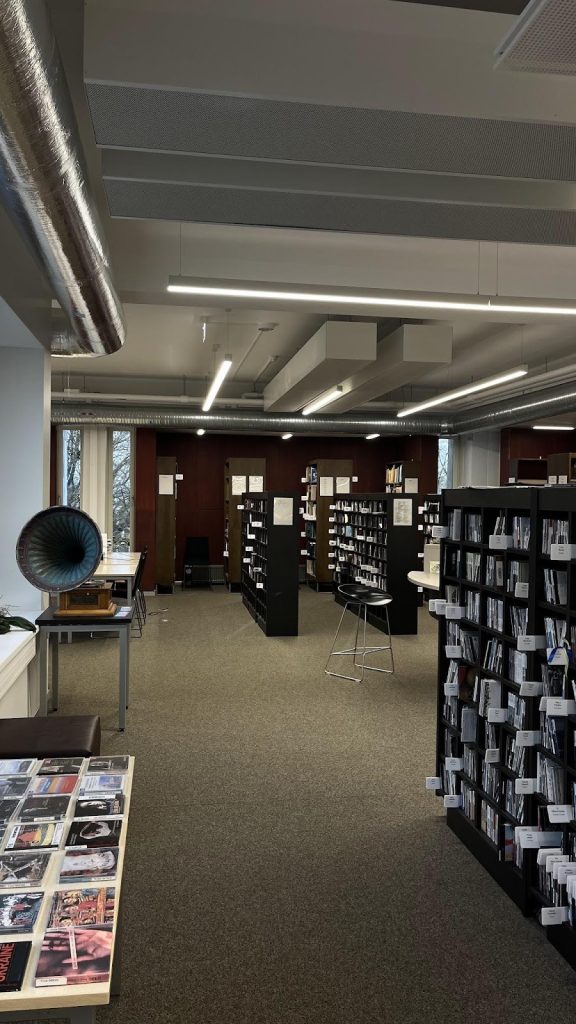
One more place I really like is the music room in the main university library. It is honestly one of my favorite spots. There is a piano there that you can play. You can also grab a pair of headphones and use the available CD players to listen to music while you focus on your work. It feels very authentic and calm. Studying there feels different, almost therapeutic. Whenever I need a change of atmosphere or want to focus quietly, this is one of the first places I go.
The Delta Centre itself is probably the coolest building on campus. If you search for the University of Tartu online, many of the photos you see will be from Delta. Everything there feels designed for students. There are group work rooms, individual study areas, classrooms and common spaces. I spend most of my study time there and I genuinely enjoy it.
Courses: More Than Just Coding
One thing I really like about the programme is that it is not overly technical by default. Of course, you can choose very technical courses if you want. However, many core courses focus more on project management, teamwork and real world software processes.
I personally think this is a very good thing. Writing code is important, but knowing how to manage a project, work with people and deliver software properly is what really matters. Especially today, when AI can already generate code, these skills become even more valuable.
For example, in the Agile course we learned how projects are structured and how tasks are planned and shared. In the DevOps course, we learned how to deploy a project to a server. These topics were not taught only through lectures. Each course included assignments, presentations, labs and weekly team work. You do not learn by memorising things here. You learn by actually doing them.
The Cold
We should also talk about the cold. Tartu is cold. Really cold.
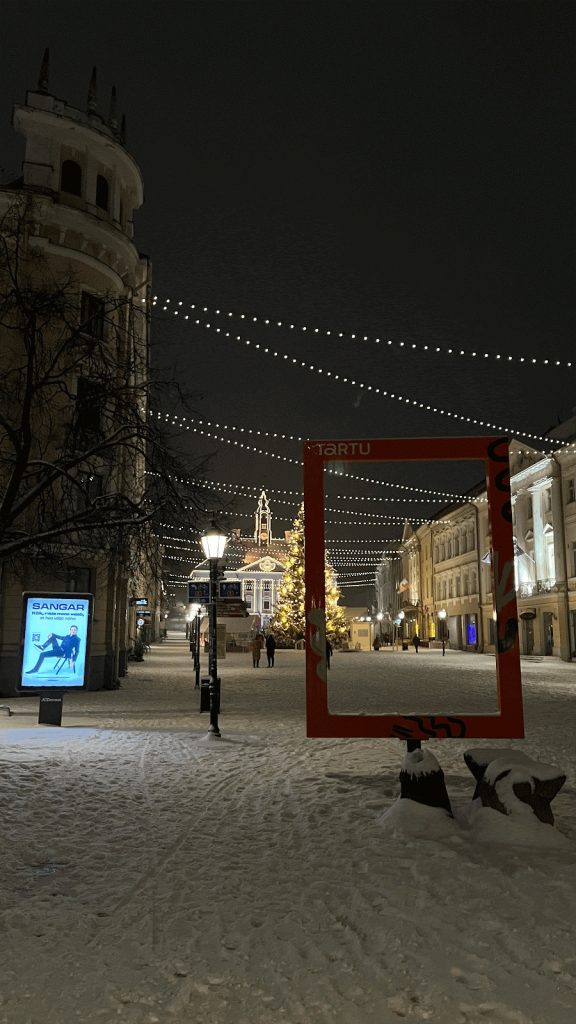
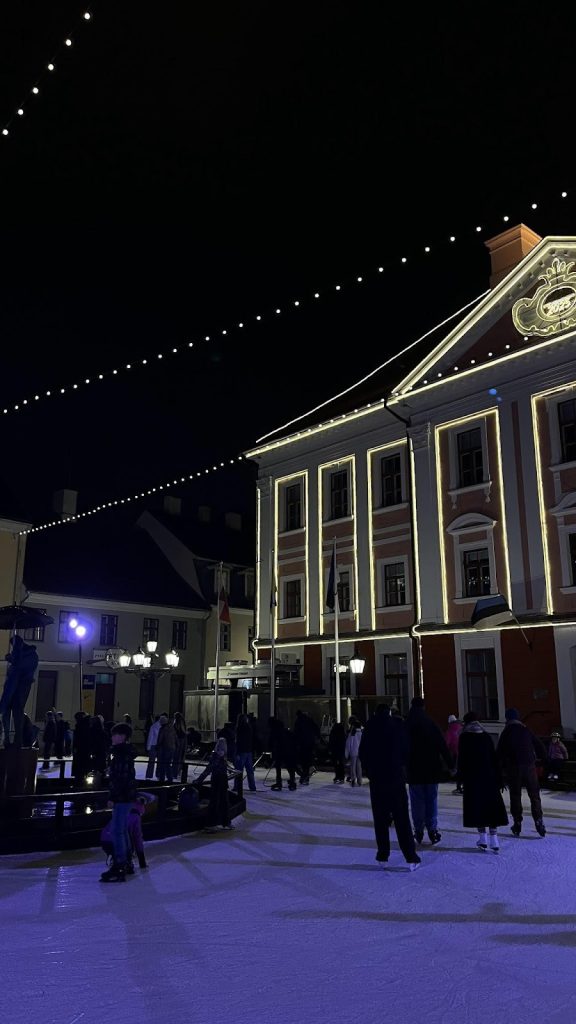
I am from Antalya, Turkey, where winter temperatures are usually around 10 to 15 degrees. In Tartu, temperatures easily drop to minus 8 or minus 10 degrees, sometimes even lower. This was my first time experiencing such cold weather. One of the most interesting things I’ve noticed is that Estonian people don’t seem to feel cold as much if at all. I have seen people ice skating outside at minus 20 degrees. It’s honestly impressive.
However, it’s quite manageable if you follow the wisdom: ‘There is no such thing as bad weather, only bad clothing.’ By investing in a high-quality winter coat and mastering the art of ‘layering,’ the crisp air starts to feel refreshing rather than biting. Plus, the heating in university buildings and dorms is so efficient that you’ll often find yourself walking around in a t-shirt indoors while it’s snowing outside.
Was It Difficult? Honestly, Yes
I said I would be honest. The first semester is not always easy. When the dark winter days start and several deadlines fall in the same week, there are moments when you seriously question yourself.
What really helped me during those times was the feeling of community. My classmates come from all over the world and everyone is dealing with similar challenges. Studying together late at night, taking walks around Tartu after exams or joining international dinner nights in student dorms helped balance the stress.
At some point, deadlines start overlapping so much that everything feels chaotic. The most important thing I learned during these moments was how to work with people. Some teammates submit tasks at the last minute. Some pull an outdated main branch and create merge conflicts. Some accidentally override your code. All of this is frustrating, but it’s also realistic. These situations will exist in working life as well, and dealing with them during your studies is actually very valuable.
Professors, Language, and Work Opportunities
Professor-Student communication is very good. Most courses use Slack, and you can easily ask questions there. You can also find teammates for projects through these channels. Professors are very approachable and helpful. They are not distant or ego driven at all, and they usually give very detailed answers.
The Estonian language is not easy. There are rules, but there are also many exceptions. I took the A1.1 Estonian course at the university, but learning the language really depends on exposure and daily use. We will see how much I can learn while living here.
Work opportunities are one of the things I like most about studying in Tartu. The university is very supportive in this area. One great example is the DIGILINK programme. It takes place every February. In this programme, you work at a company three days a week, either remotely or on site, for eleven months. You earn 1,000 euros per month and you can even write your master’s thesis with that company. This is a huge advantage for students. You can find more here.
In addition to that, large technology companies like Amazon and Microsoft have branches in Tallinn and regularly share job openings. It is definitely worth checking them from time to time.
Final Thoughts
I came to Tartu with many doubts. Now I can honestly say that I am very happy I made this decision. Software Engineering at the University of Tartu helped me grow both technically and personally. The courses taught me how to work with people, manage projects and approach software development in a realistic way.
The cold was difficult at first, but now I am used to it. Ice skating at minus 10 degrees and then drinking something warm in the city centre sometimes makes me think that this is what life is about.
If you have any questions, feel free to ask.
Head aega!
All images are the author’s own.


Leave a Reply